Energy-Efficient Conveyor Drives in Intralogistics: Decentralised Solutions
Are the conveyors in your warehouse running empty all day? How zone control, motor-mounted inverters and motor-driven rollers cut energy and wiring costs.
What drives the energy bill of a conveyor line is often not the load it carries, but the time it runs empty.
With the growth of e-commerce, conveyor lines in warehouses, distribution and order-picking centres have become longer and more complex. In intralogistics projects, Euronorm Engineering sees a familiar picture: the whole line runs on one large motor, or on many drives that run continuously, even when there is no product.
Three key design questions
- Can the line be divided into zones? Running only the zone that carries product directly reduces idle losses.
- Should drives be central or decentralised? Drives in the control cabinet mean long motor cables, larger cabinets and longer commissioning.
- How variable is the speed profile? Acceleration, deceleration and accumulation are where inverter control brings the most benefit.
Zone control with motor-driven rollers
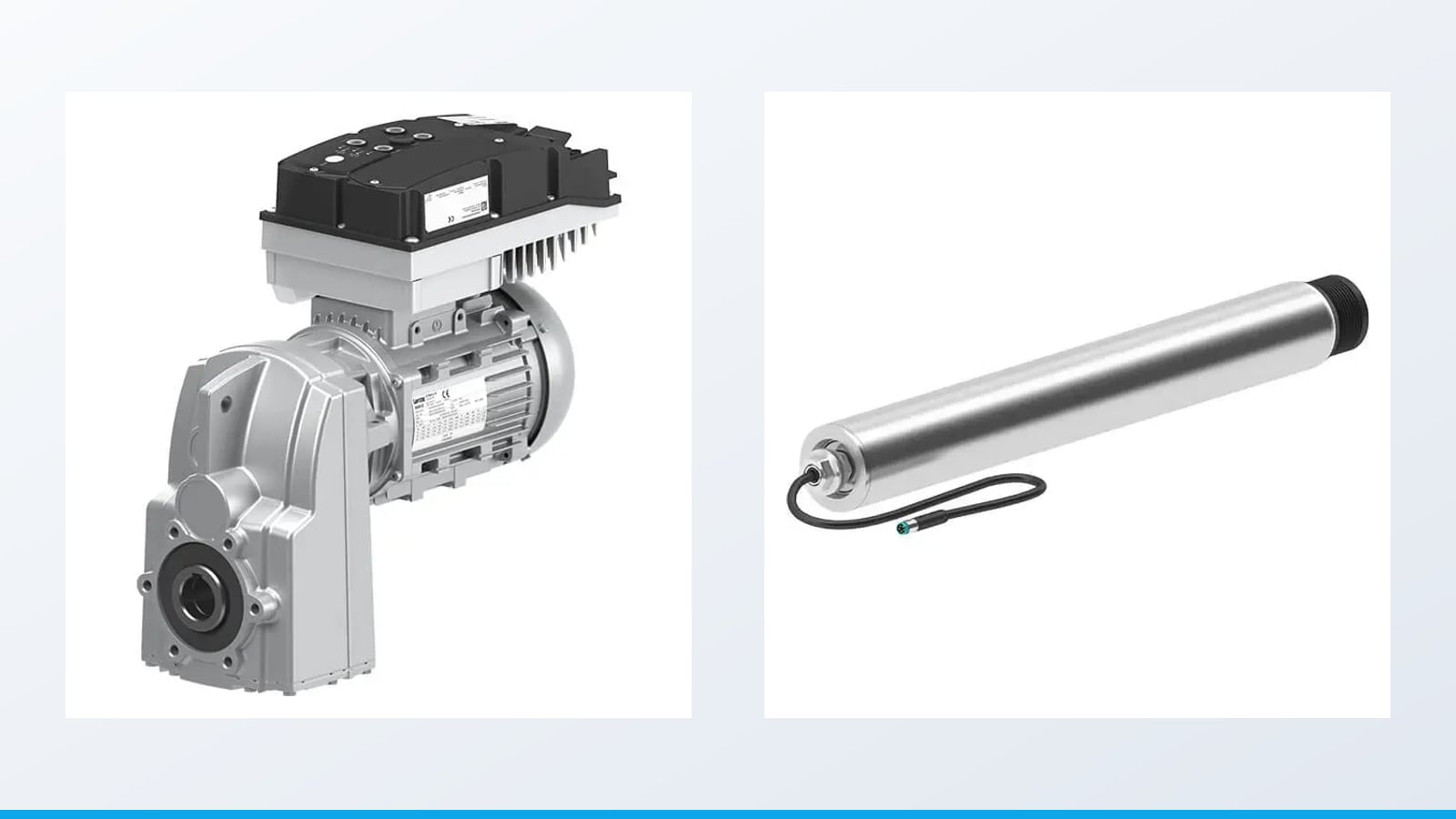
For light and medium box/tote handling, [conveyor rollers with the motor integrated inside the roller](/en/products/lenze/lenze-motors/lenze-motor-driven-roller)conveyor rollers with the motor integrated inside the roller/en/products/lenze/lenze-motors/lenze-motor-driven-roller are a common solution. Each roller is driven by its own motor, so the line is split into zones and a zone without product stops. Separate gearboxes, chains and pulleys are no longer needed, which also reduces mechanical maintenance.
For heavier loads: geared motors with motor-mounted inverters
For heavier applications such as pallet conveyors, turntables and lift transfer units, geared motors come into play. Two approaches stand out:
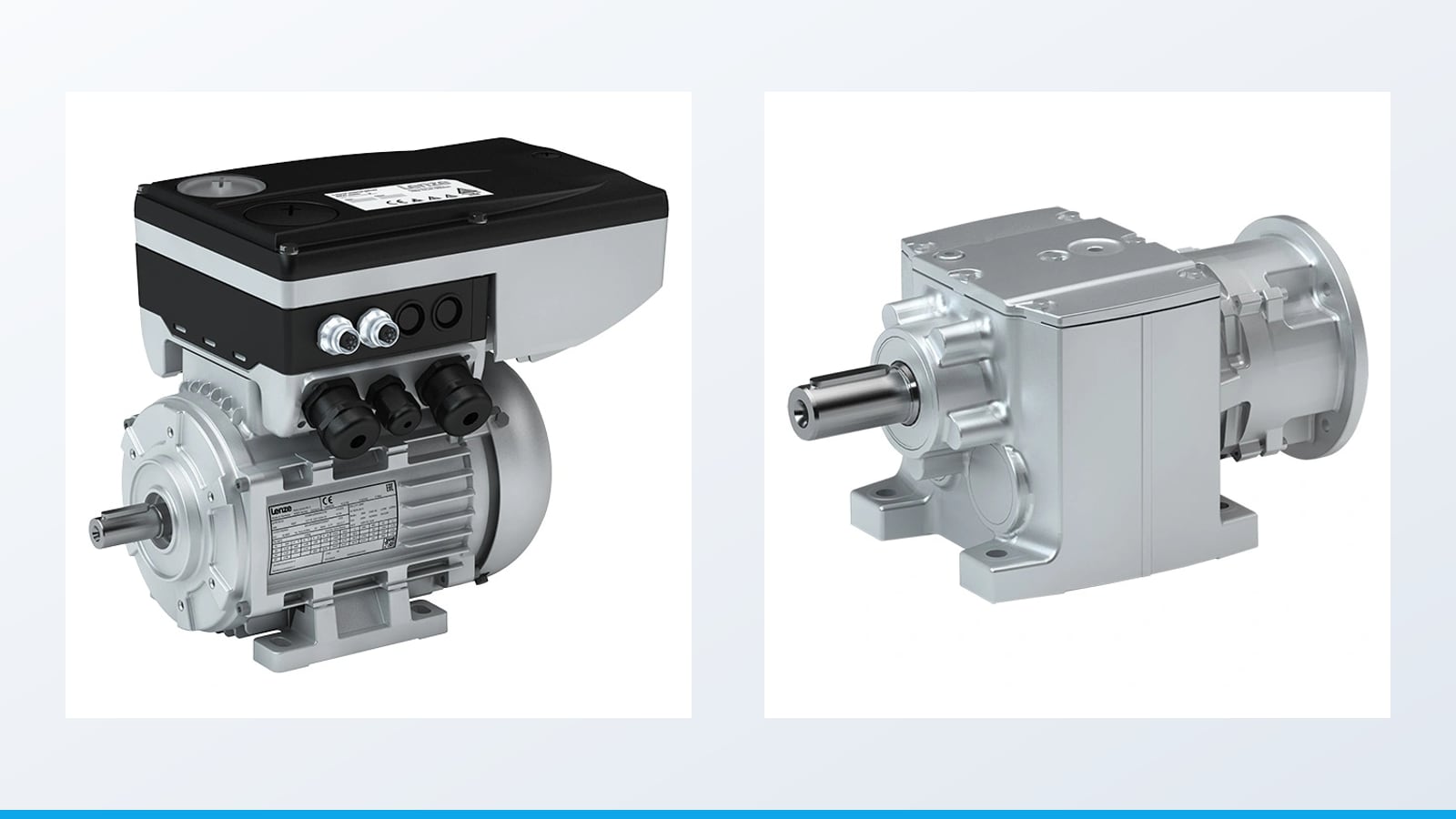
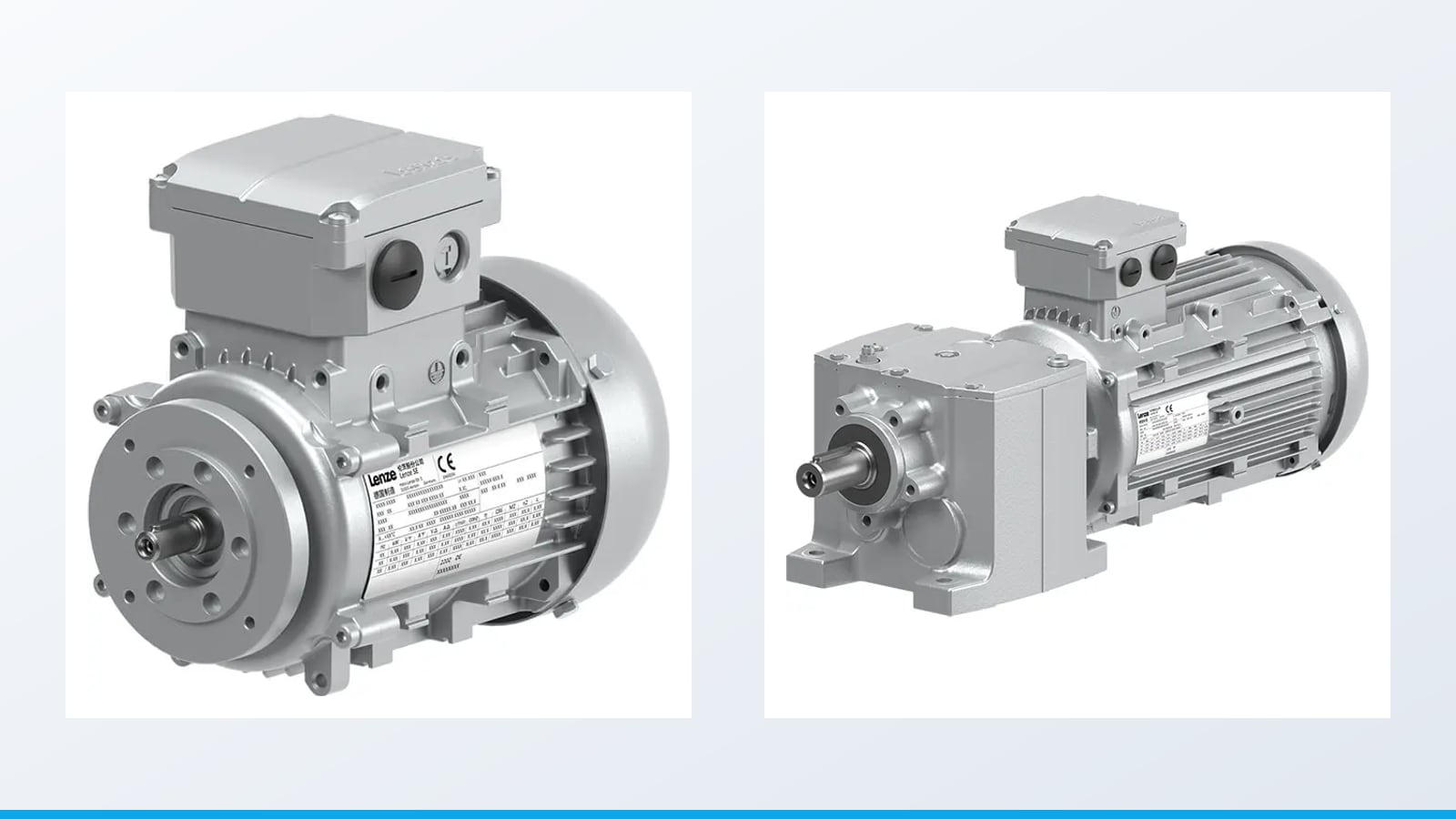
- Shaft-mounted helical geared motors: Mounted directly on the conveyor shaft, reducing the need for couplings, pulleys and alignment. [Shaft-mounted helical geared motors with high-efficiency motors](/en/products/lenze/lenze-geared-motors/lenze-g500-s-m550-v-shaft-mounted-helical-gearmotors)Shaft-mounted helical geared motors with high-efficiency motors/en/products/lenze/lenze-geared-motors/lenze-g500-s-m550-v-shaft-mounted-helical-gearmotors are an example of this class.
- Motor-mounted inverter: With [shaft-mounted geared motors featuring an integrated decentralised frequency inverter](/en/products/lenze/lenze-geared-motors/lenze-shaft-mounted-helical-gearmotors-g500-s-m550-v-i550-motec)shaft-mounted geared motors featuring an integrated decentralised frequency inverter/en/products/lenze/lenze-geared-motors/lenze-shaft-mounted-helical-gearmotors-g500-s-m550-v-i550-motec, speed control happens in the field: the cabinet shrinks, motor cables get shorter and each zone runs its own speed profile.
What can you gain on the energy side?
- No more idle running: With zone control, fewer motors run when there is no product.
- High-efficiency motors: IE5/IE6-level motors reduce losses in continuously running zones.
- Soft start and stop: Ramps set on the inverter reduce mechanical shock and prevent product slippage and wear.
Picking and handling stations
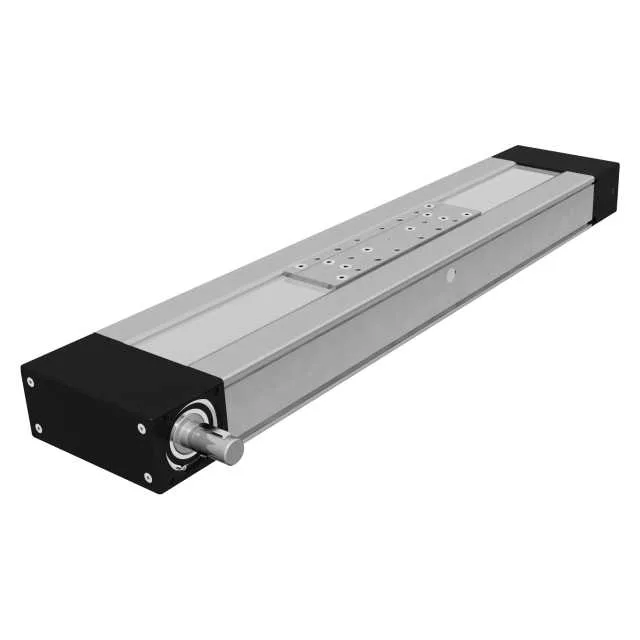
At the end of the conveyor line, order-picking, labelling and sorting stations need fast, long-stroke linear motion. Here, [belt-driven linear units](/en/products/unimotion/unimotion-linear-units/unimotion-ctj)belt-driven linear units/en/products/unimotion/unimotion-linear-units/unimotion-ctj stand out for their compact design and high speed.
Conclusion
Energy efficiency in intralogistics comes from addressing motor class, zone control and decentralised drive architecture together. Euronorm Engineering supports machine builders and site owners with line-based drive selection, sizing and commissioning.