Motor Efficiency Classes IE1–IE6: A Practical Guide for Machine Builders
What do the IE3 requirement, the IE4/IE5 advantage and the IE6 claim really mean? Euronorm Engineering simplifies efficiency classes, regulations and annual savings calculations.
The purchase price of an electric motor is usually small compared to the energy it consumes over its lifetime. That is why the efficiency class is not a label but an operating-cost decision.
Electric motors consume a large share of the electricity used in industry. From conveyors to pumps, mixers to packaging machines, almost every line has a continuously running motor. In selection projects with machine builders, the question Euronorm Engineering hears most often is: "Is IE3 enough, or should we move to IE4/IE5?"
What do IE classes tell you?
IE (International Efficiency) classes compare how much loss a motor generates while delivering the same mechanical power:
- IE1 – Standard efficiency: Practically no longer used in new machines.
- IE2 – High efficiency: Still found at small ratings and in some inverter-fed applications.
- IE3 – Premium efficiency: Today the minimum level across most power ranges.
- IE4 – Super premium efficiency: Rapidly spreading in continuous-duty applications.
- IE5 – Ultra premium efficiency: Usually achieved with permanent magnet or synchronous reluctance technology.
Limits for line-fed motors are defined in IEC 60034-30-1, and for variable-speed motors in IEC TS 60034-30-2. IE6 is not yet a class defined in the standard; some manufacturers use the term to describe loss levels even below IE5. When selecting, look at the catalogue loss and efficiency values rather than the label.
Regulation: why IE3 is now the "minimum"
Under EU Ecodesign Regulation 2019/1781, IE3 became the minimum for 2-, 4-, 6- and 8-pole motors from 0.75 to 1000 kW, and IE4 for 2-, 4- and 6-pole motors from 75 to 200 kW. For exporting machine builders this means a smooth CE process in the target market. Turkey also applies ecodesign rules aligned with the EU.
A rough savings calculation
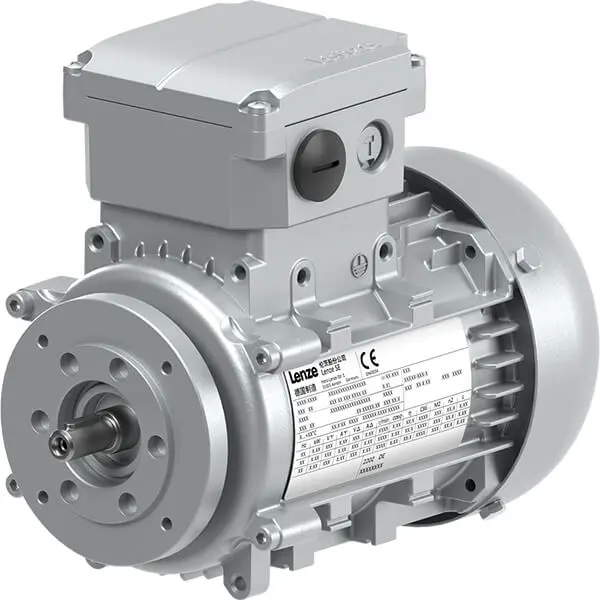
Consider a 7.5 kW IE3 motor delivering 5.6 kW of mechanical power at 75% load and running 6,000 hours per year. At around 90.4% efficiency, motor losses are roughly 0.6 kW. With a [high-efficiency three-phase motor that cuts losses by up to 60% compared to IE3](/en/products/lenze/lenze-motors/lenze-ie6-m550-v-three-phase-ac-motors)high-efficiency three-phase motor that cuts losses by up to 60% compared to IE3/en/products/lenze/lenze-motors/lenze-ie6-m550-v-three-phase-ac-motors, losses drop to about 0.24 kW:
- Hourly saving: ~0.36 kW
- Annual saving: ~2,100 kWh
- On a line with ten motors: ~21,000 kWh/year
This is a rough estimate based on nominal values; real savings depend on the load profile, operating hours and the rest of the drive train.
Not just the motor: the whole drive train
Efficiency is not limited to the motor. Gearbox type, inverter and control strategy determine overall system efficiency:
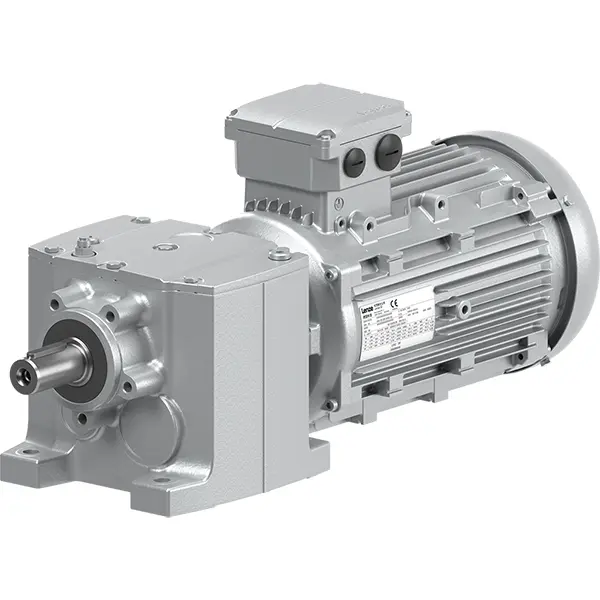
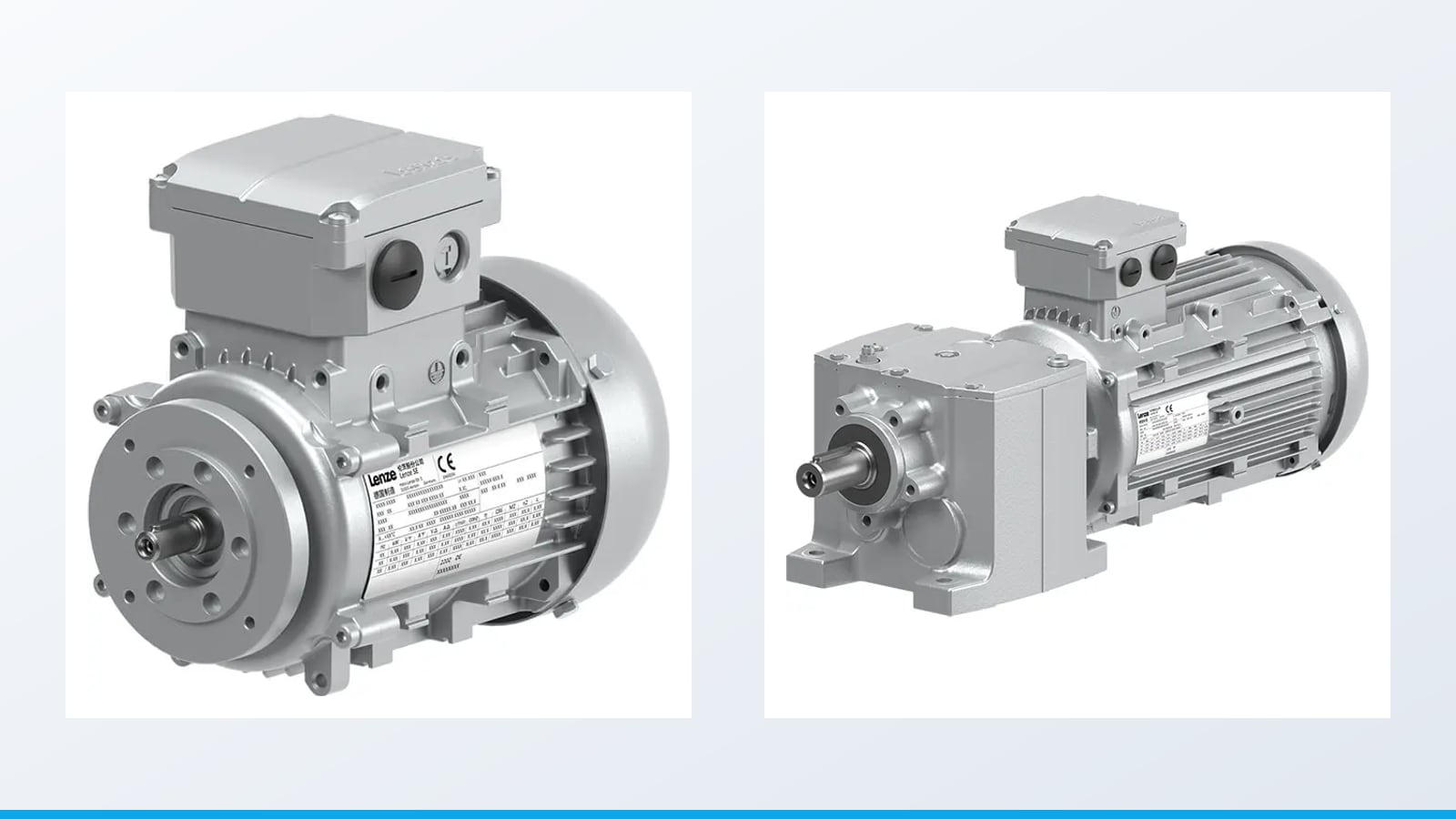
- Gearbox selection: Helical and bevel gearboxes generally offer higher efficiency than worm solutions at the same ratio. That is why [helical geared motors combined with high-efficiency motors](/en/products/lenze/lenze-geared-motors/lenze-g500-h-m550-v-helical-gearmotors)helical geared motors combined with high-efficiency motors/en/products/lenze/lenze-geared-motors/lenze-g500-h-m550-v-helical-gearmotors are a frequent choice.
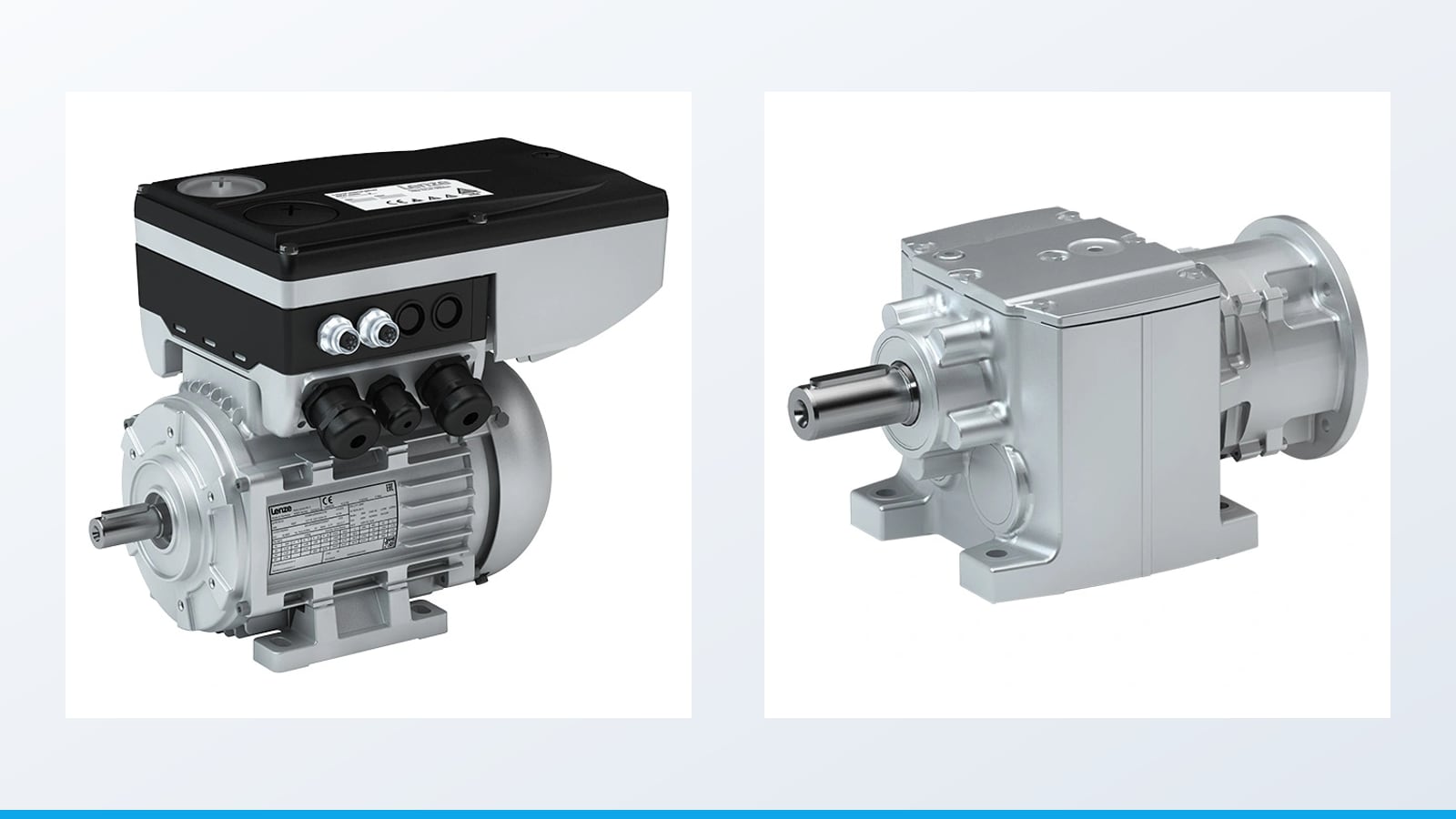
- Speed control: In variable-flow pumps and fans, running on a [frequency inverter](/en/products/lenze/lenze-inverters/lenze-i550)frequency inverter/en/products/lenze/lenze-inverters/lenze-i550 is the biggest saving, regardless of motor class.
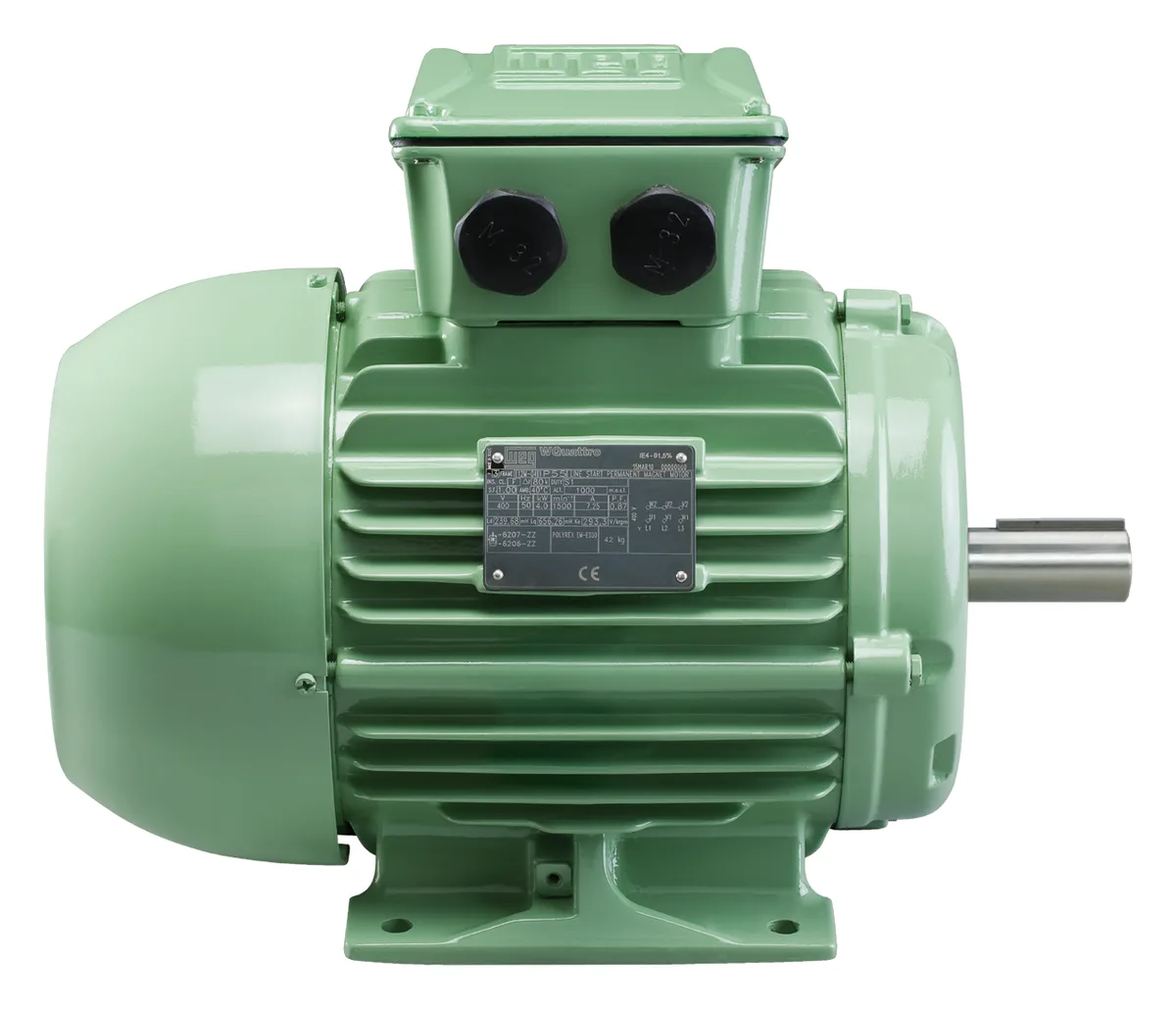
- Line-start solutions: Where an inverter cannot be used, [line-start permanent magnet IE4 motors](/en/products/weg/weg-motors/weg-w22-quattro)line-start permanent magnet IE4 motors/en/products/weg/weg-motors/weg-w22-quattro deliver higher efficiency in the same frame size as an induction motor.
Euronorm's recommendation
For continuous-duty applications (more than 4,000 hours per year) we recommend IE4 and above; for short-time or intermittent duty, IE3 plus correct sizing. An oversized motor wastes energy at partial load whatever its efficiency class. When you share your application data, our engineering team sizes the motor, gearbox and inverter combination with you.